Invitation
Climate infrastructure as living ritual
Gardens of Earth
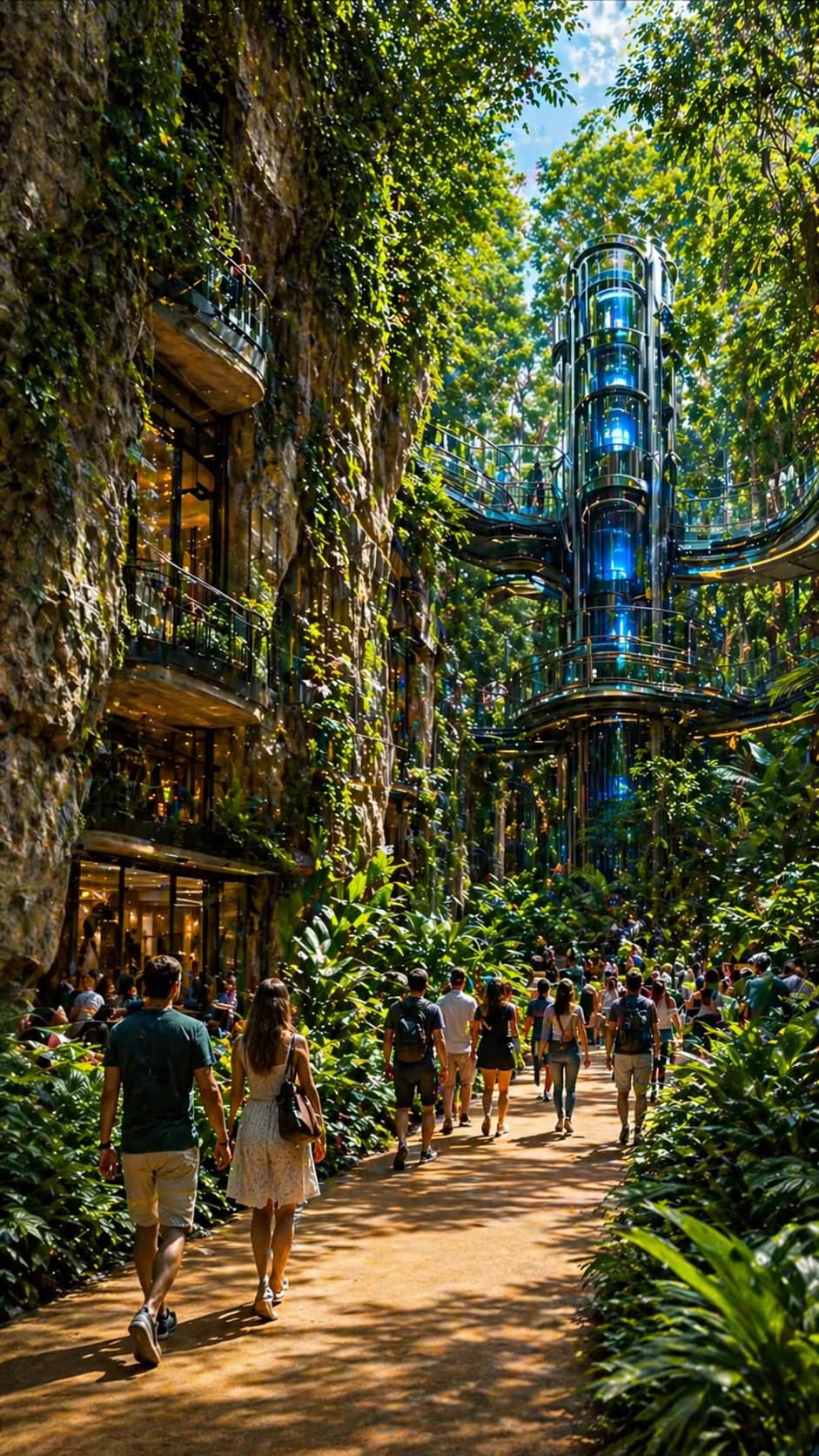
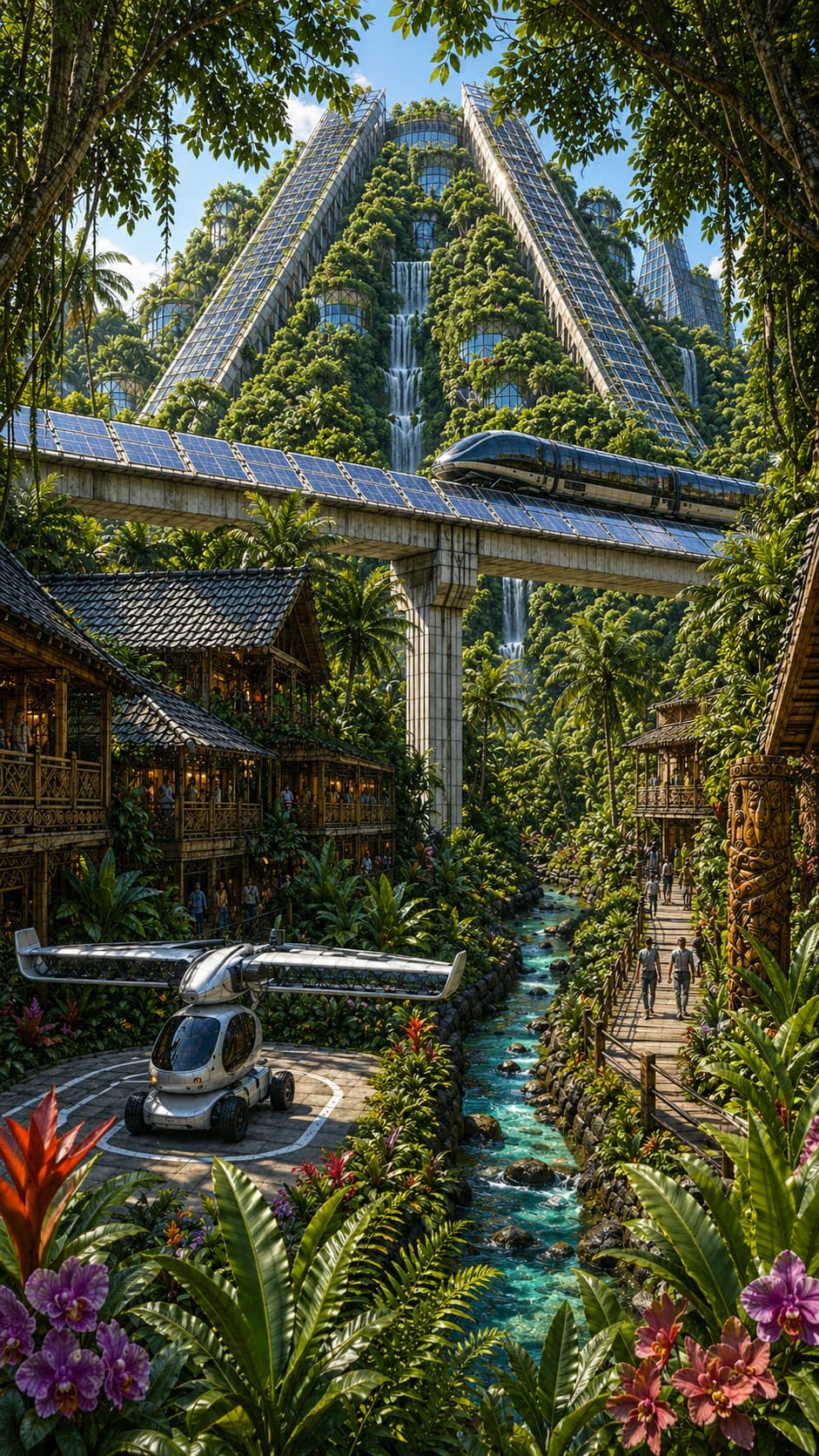
Section concept
A World Beyond Traffic
Movement without congestion. Cities without cars.
- No traffic jams
- No parking lots
- No noise corridors
- No dead space
Replaced by faster, quieter, human-centered mobility systems.
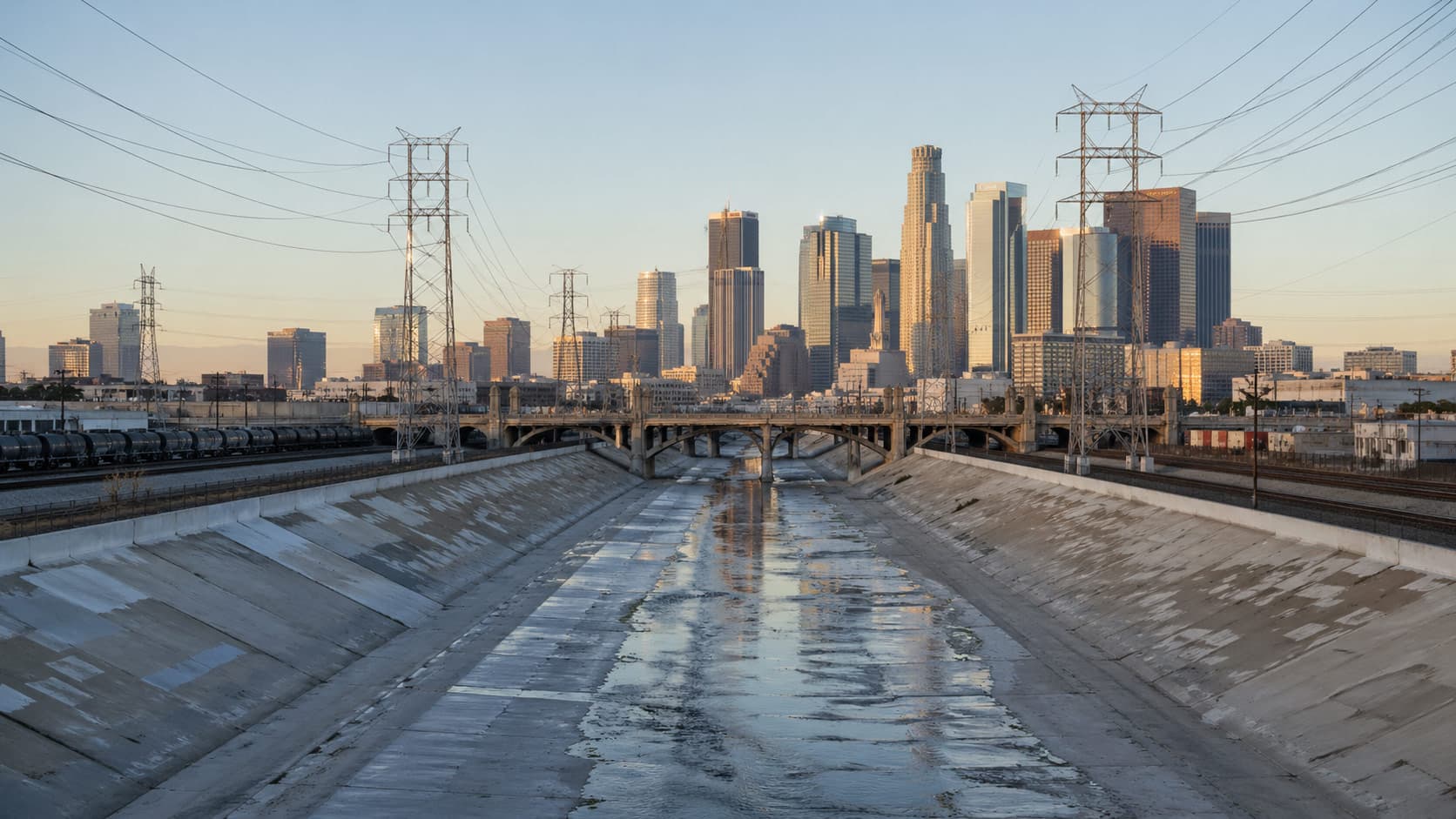
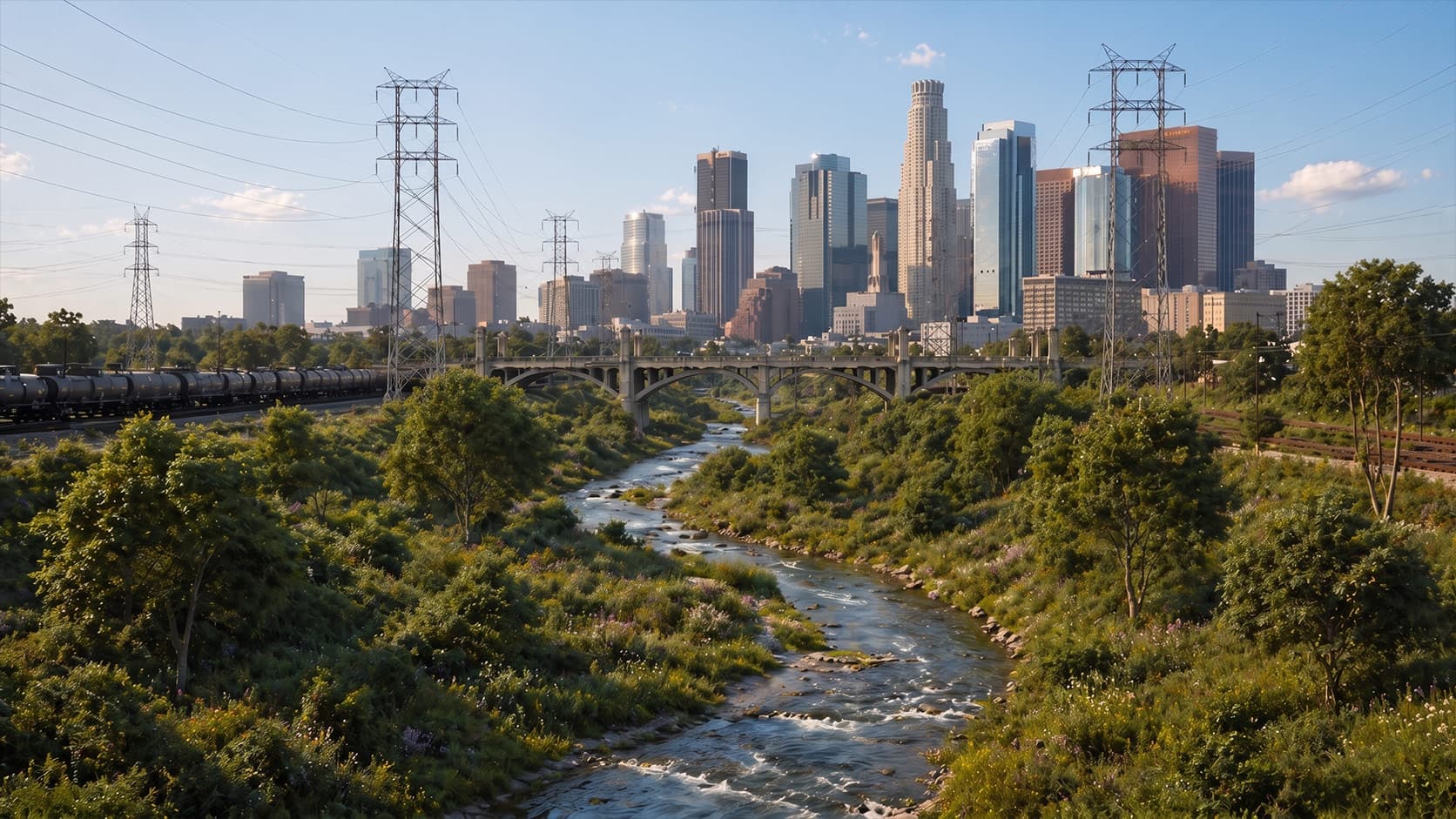
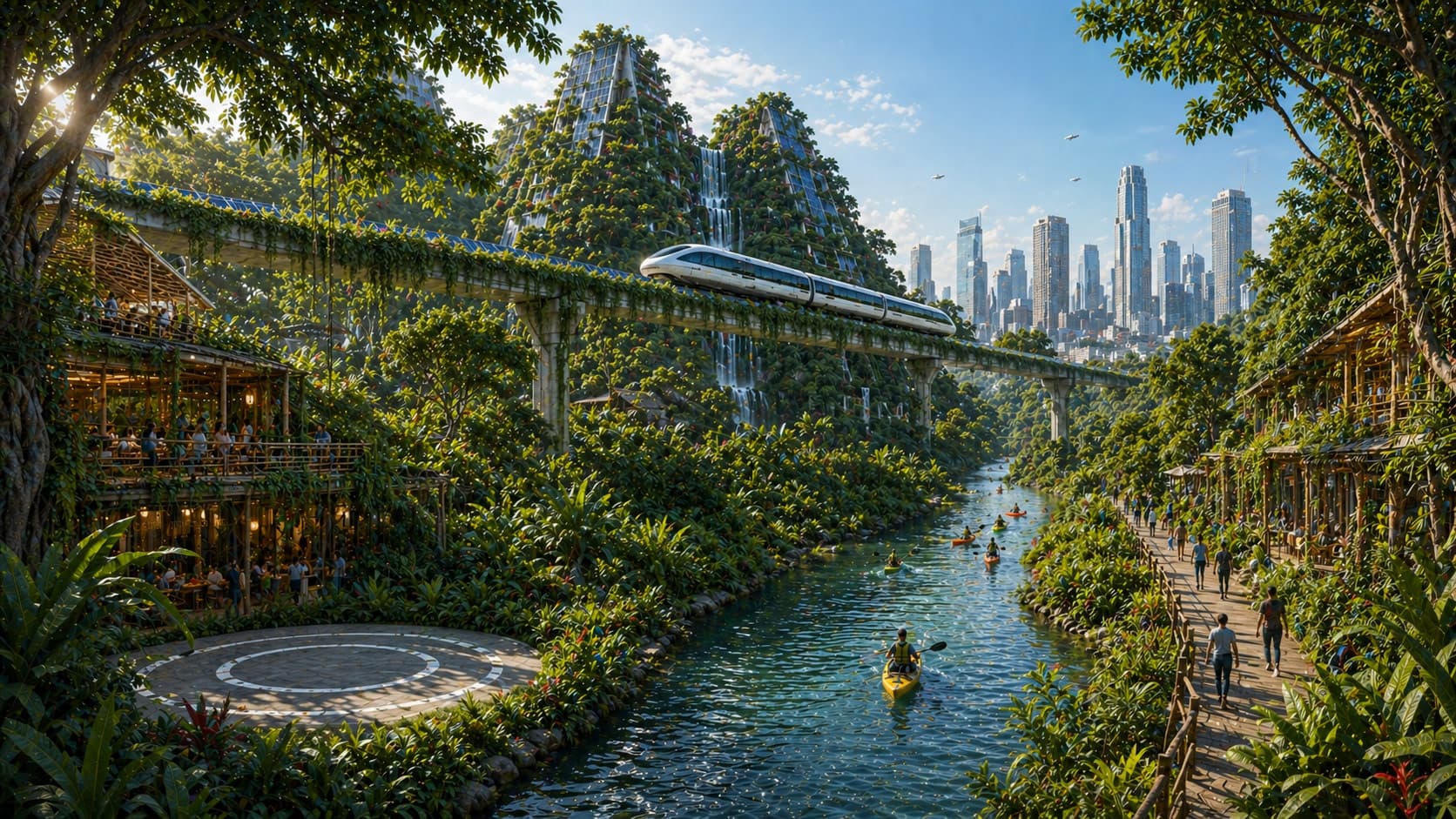
- The Los Angeles River channel today. This is where we are.
- A reachable mid-term restoration plan for the Los Angeles River. This is the next reachable step.
- A reimagined Los Angeles River with restored ecology. This is where we want to be.
Living systems
One neighborhood. Many connections.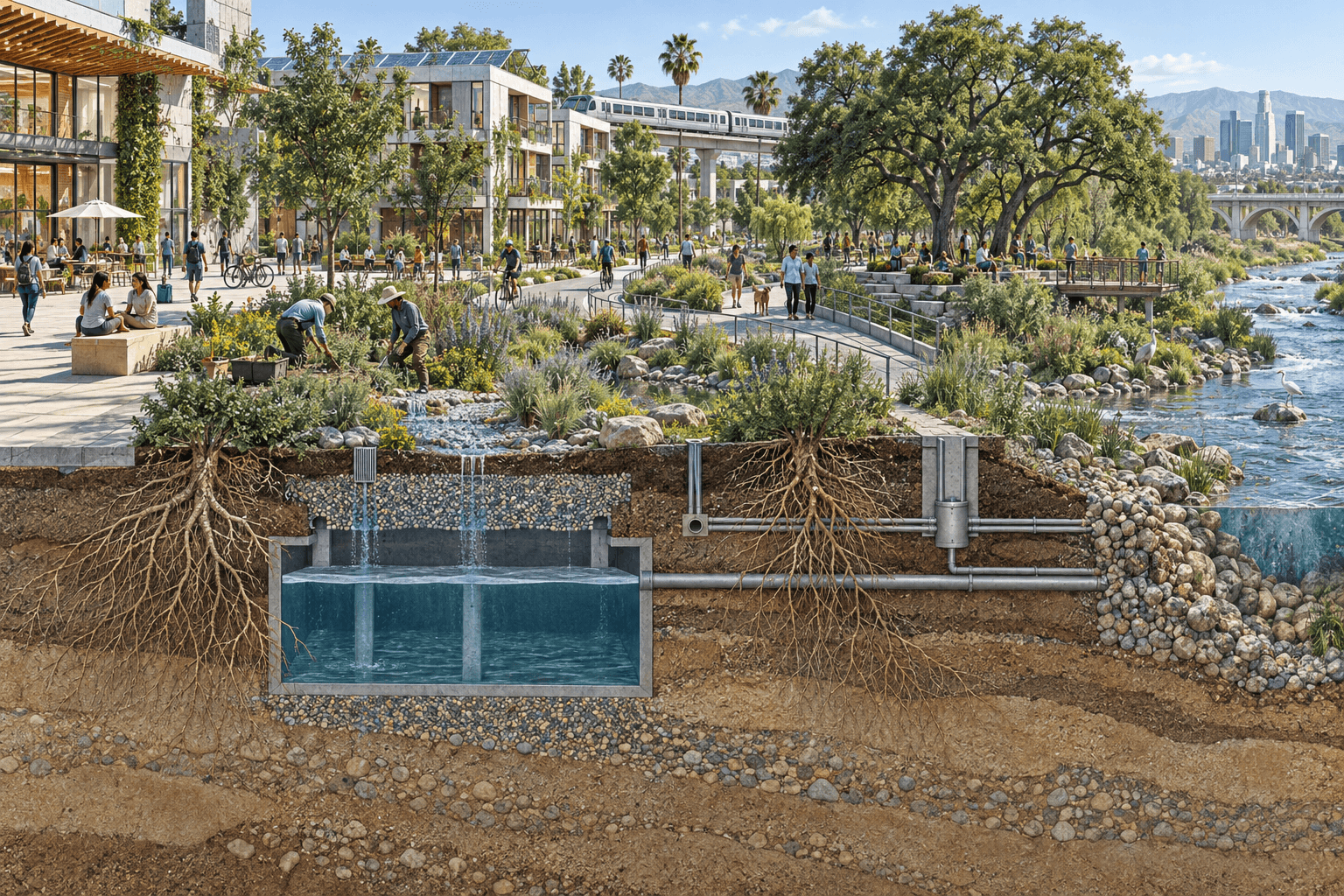
Heat: Begin where the city feels the heat.
Start with exposed streets, sunlit pavement, and the everyday journey to a transit stop.
Water: Give water more than one purpose.
Capture rainfall. Treat and store it. Connect district reuse with planting, and pair pumping with solar energy.
Roots: Build the living foundation.
Make room for soil, moisture, and site-appropriate roots. The landscape begins beneath our feet.
Transit: Connect places. Give space back to people.
Link shared transit with accessible walking and cycling routes, making the spaces between destinations part of daily life.
Hands: A living city needs care.
Residents, gardeners, technicians, and transit crews keep the system working. Stewardship is infrastructure, too.
Shade: Make room for everyday life.
A place to pause. A comfortable route home. A neighborhood designed around the people who live there.
Not separate projects. One living system.
 Preparing the journey
Network dispatch
One protocol,
many climates.
Local lessons. Planetary connections.
A shared planet. A local beginning.
EOxCloudless by EOX IT Services GmbH · Contains modified Copernicus Sentinel data 2016 & 2017 · CC BY 4.0
River: © OpenStreetMap contributors · Historical satellite mosaic, not live imagery
River: © OpenStreetMap contributors · Historical satellite mosaic, not live imagery
 Concept illustration
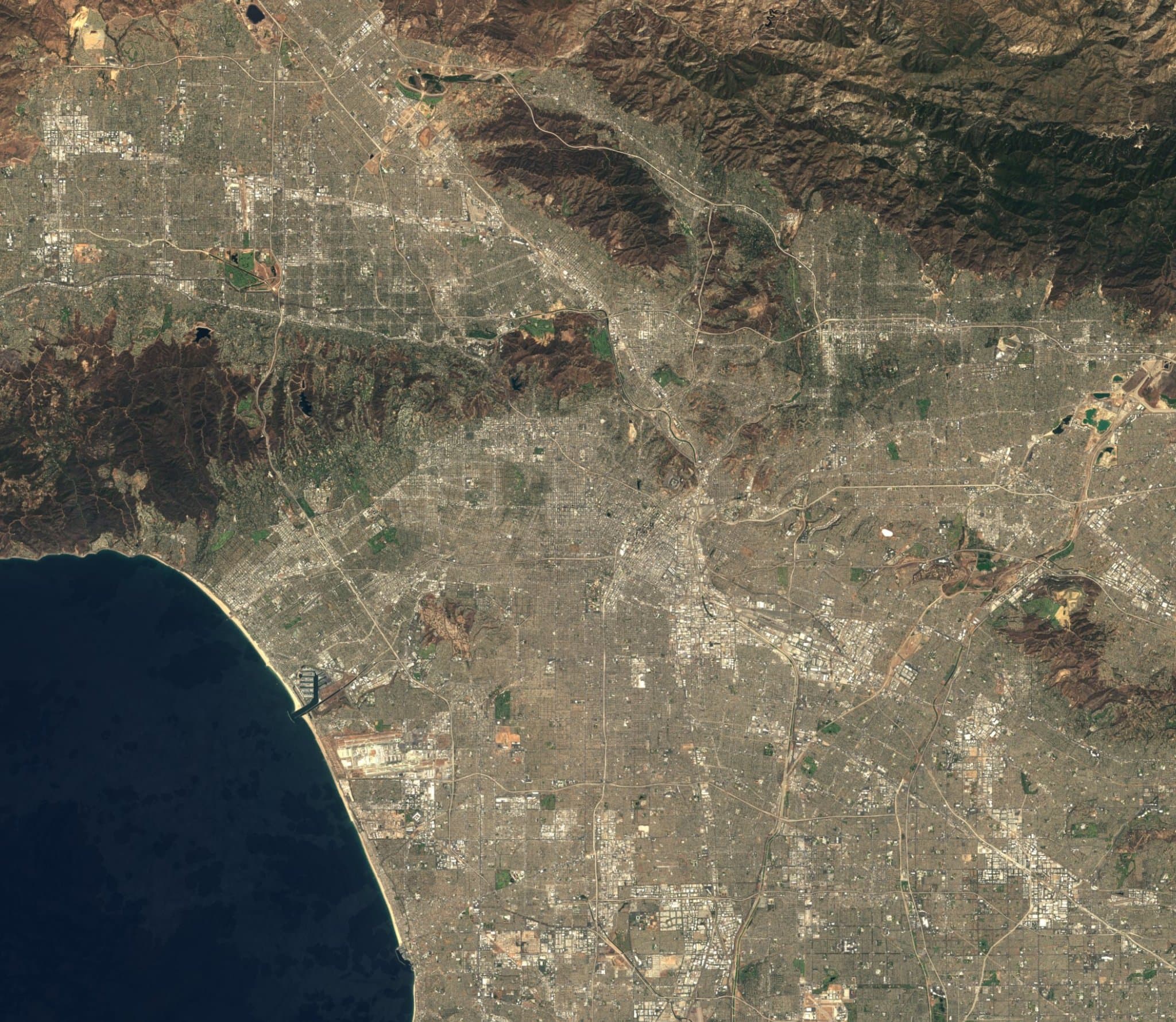
Los Angeles
An Aspiring Biourban River City
Defining ecological mechanism
Gardens of Earth proposes LA River greening to reconnect habitat, water, shade, and public life, learning from the cities on this journey.
Our aspiration
An ambition, not an achieved status. LA is presented here as an aspiring peer, not yet an established biourban leader.
Los Angeles River highlighted on map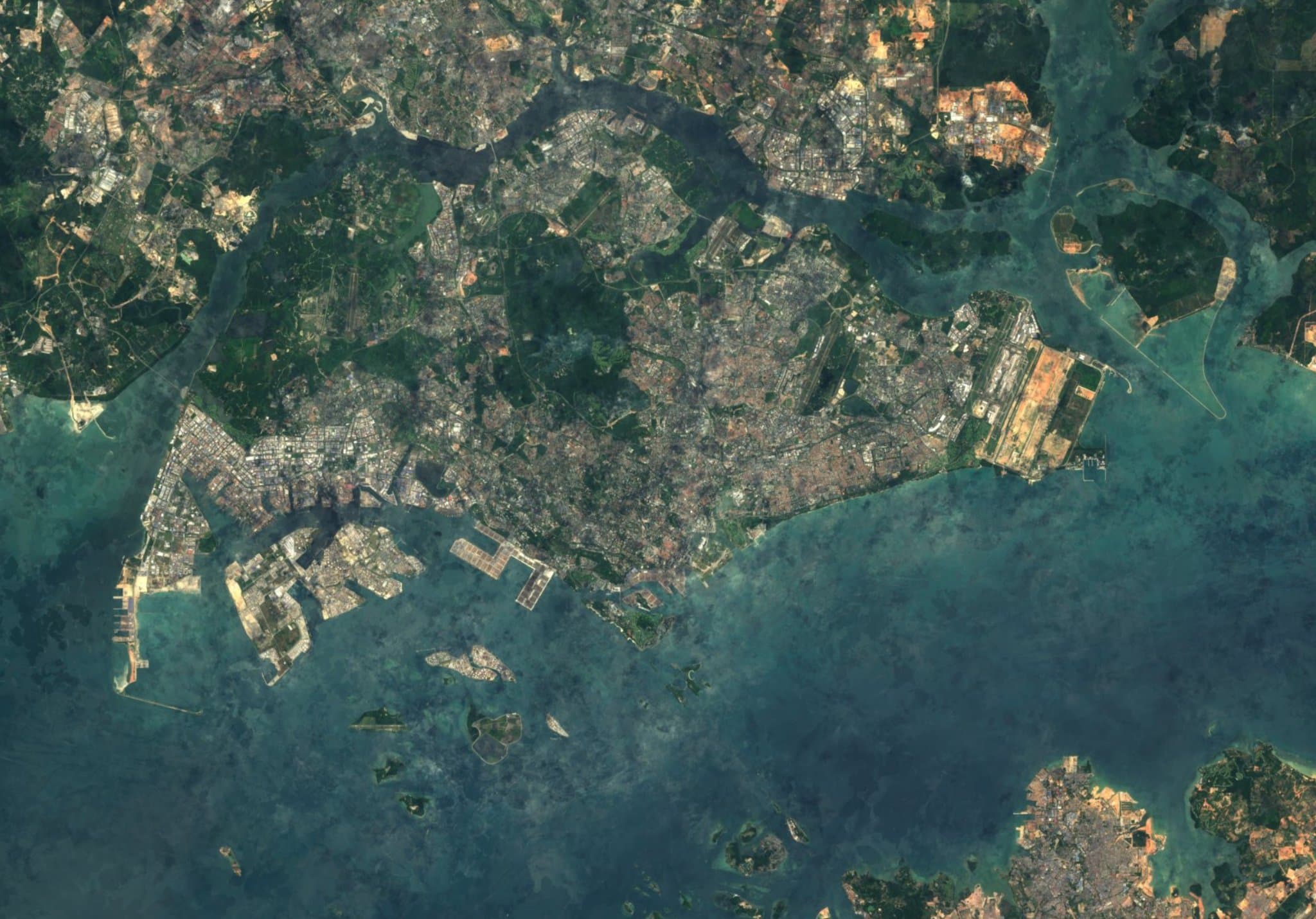
 Concept illustration
Singapore
Biophilic High-Density Integration
Defining ecological mechanism
LUSH landscape replacement and ABC Waters integrate greenery with development and waterways. Replacement requirements vary by location and development type.
Built example
At Bishan-Ang Mo Kio Park, a concrete canal became a naturalized river within a public park: a built example of water and landscape working together.
 Concept illustration
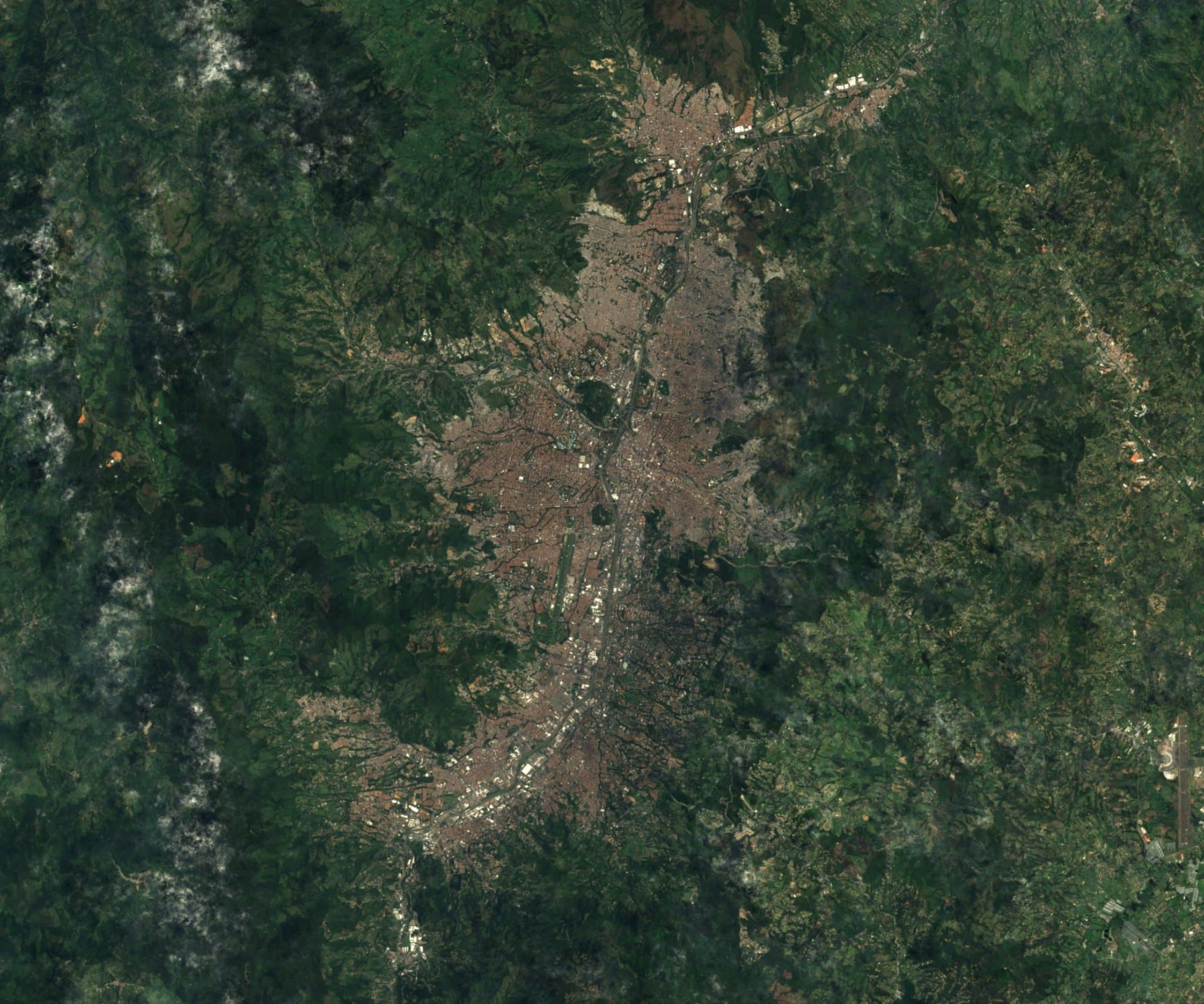
Medellín, Colombia
Targeted Microclimate Corridors
Defining ecological mechanism
Corredores Verdes: the 30-corridor programme connected planting along 18 roads and 12 waterways, bringing shade into everyday urban routes.
Reported impact
More than 2°C of cooling was reported for the green-corridor intervention by UNEP in 2019. This is a local reported result, not a citywide guarantee.
 Concept illustration
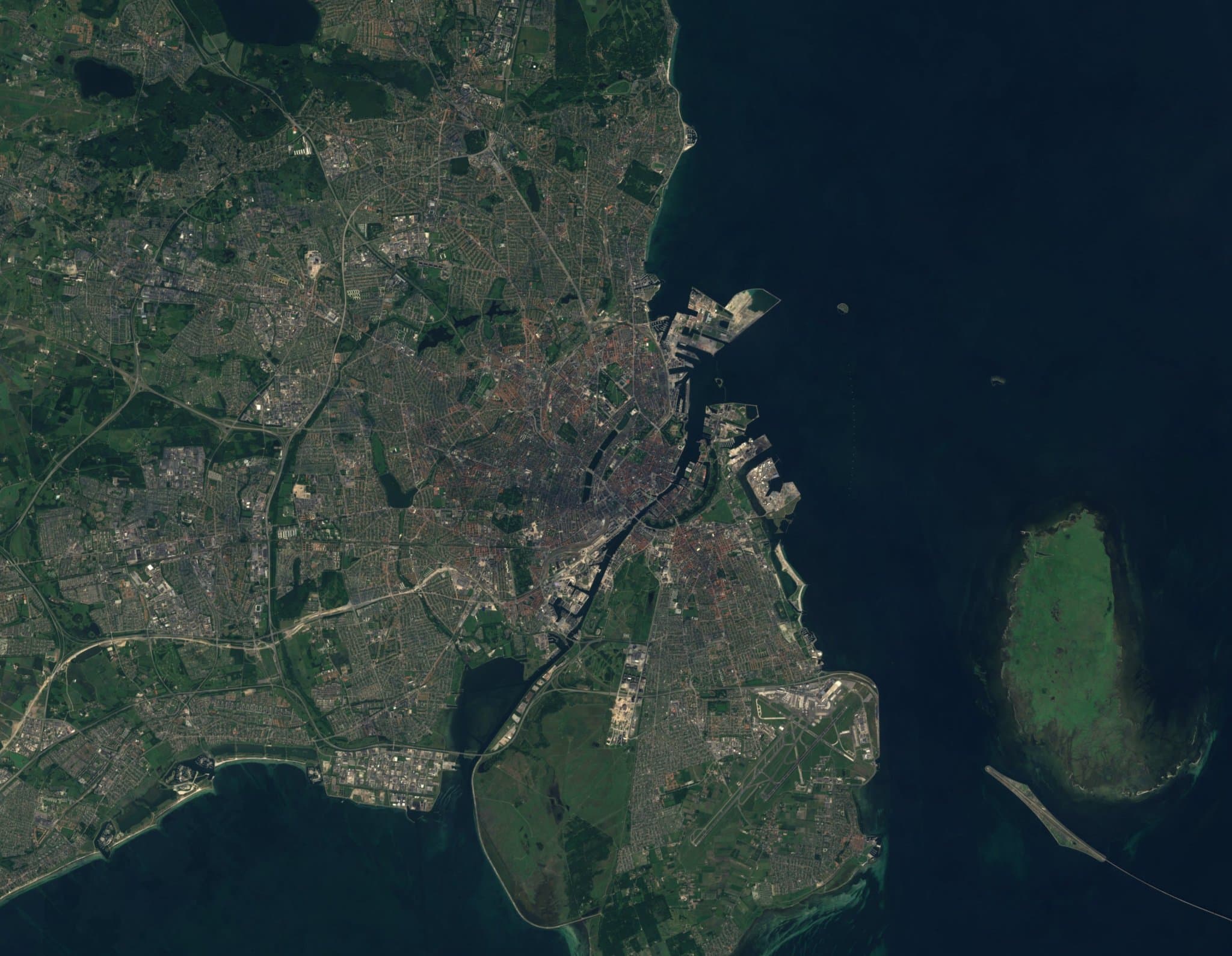
Copenhagen, Denmark
Hydrological Climate Adaptation
Defining ecological mechanism
The Cloudburst Management Plan combines parks, sunken streets, and temporary surface storage with underground drainage to manage extreme rainfall.
Design standard
A 100-year rainfall event is the planning standard, not a claim of immunity to flooding. Surface landscapes complement, rather than replace, pipes.
 Concept illustration
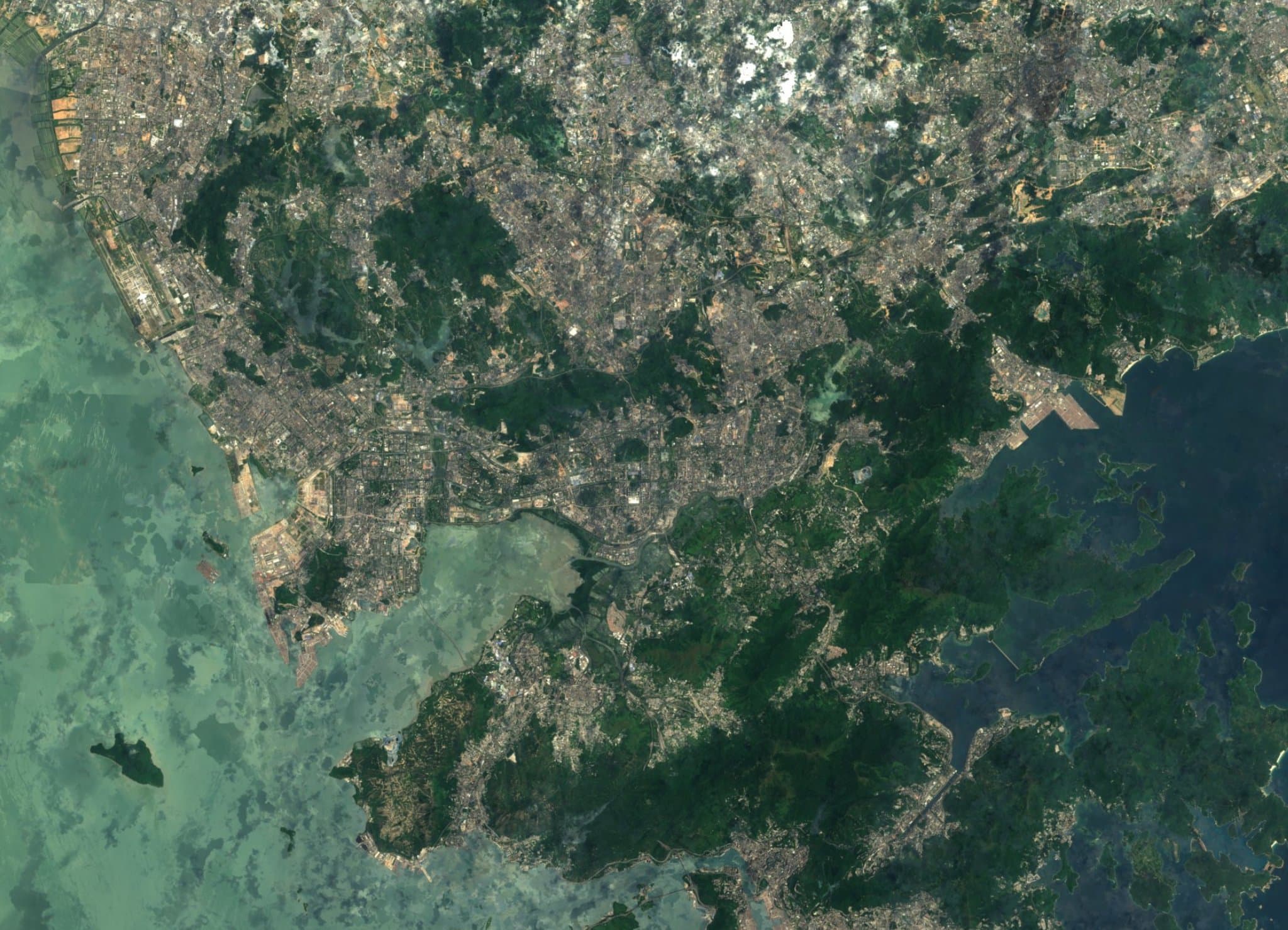
Wuhan & Shenzhen, China
Regional Sponge City Engineering
Defining ecological mechanism
Sponge-city approaches combine bioswales, permeable paving, constructed wetlands, and lake restoration. This paired case is shown geographically at Shenzhen.
Programme target
70% of rainfall absorbed and used locally is the national programme target. It is not a uniform measured retention rate across either city.
 Concept illustration
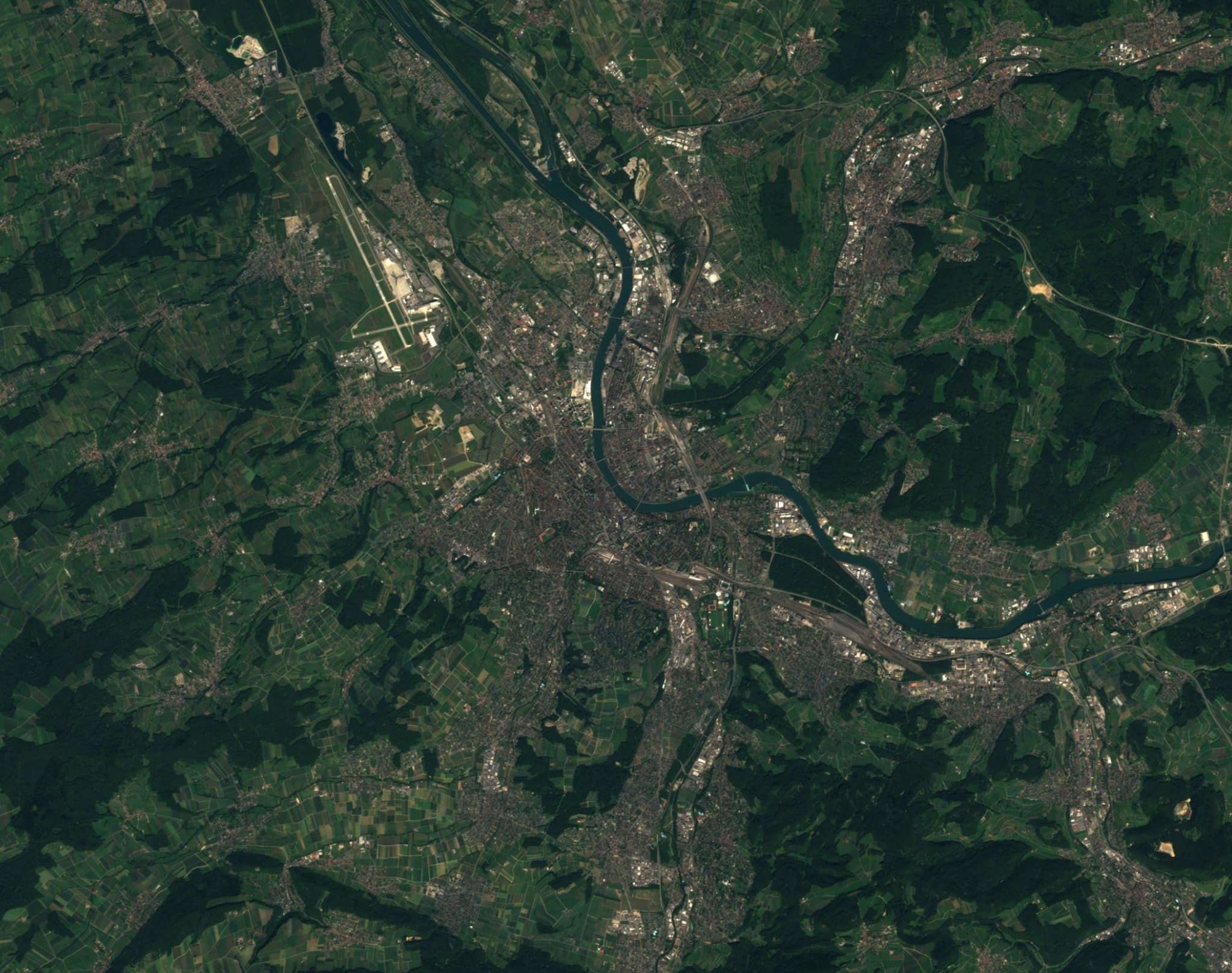
Basel, Switzerland
Structural Biodiversity Mandates
Defining ecological mechanism
Green-roof requirements for new and renovated flat roofs pair locally appropriate substrate with native planting and habitat features for biodiversity.
Reported adoption
5.71 m² of green roof per resident was reported for 2019 by Climate-ADAPT. Roof area is an adoption measure, not proof that every roof is a nature reserve.
The journey visits Los Angeles, Singapore, Medellín, Copenhagen, Shenzhen, and Basel, returning to orbit between cities. Los Angeles River greening is an aspiration; other profiles distinguish built examples, reported results, and policy targets.
About
Cities can become living systems.
Gardens of Earth is an evolving exploration of climate-adaptive urban life, where mobility, water, habitat, infrastructure, and culture are designed as one connected ecology.
Contact
Continue the conversation.
Research collaborations, concept development, and project conversations are welcome through the Gardens of Earth repository.
Visit the project repository